Is a Joint Supplement Like CartiVex Worth Buying? 7 Checks
A joint supplement like CartiVex is worth considering when its label, dose and safety notes are clear to you. These seven checks walk through the evidence, the dose, safety and the label of a one-a-day turmeric capsule.
Last updated · Review date · Who reviewed this page · How we write and review
Joint supplements have mixed evidence. Turmeric has small, short knee trials at much higher doses than most capsules. Glucosamine is advised against by a major guideline. Exercise has stronger proof than any capsule. No supplement is FDA approved. Run these seven checks, and ask a doctor first if you take medicines.
What are the key facts on joint supplements?
- FDA: a supplement is not FDA approved before sale. The company is first responsible for safety and truthful claims (FDA, 2022) (FDA, 2026).
- Turmeric: small, short knee trials look modestly positive, mostly at about 93 to 2,000 mg of curcuminoids a day (Paultre et al., 2021).
- Glucosamine: the 2019 guideline strongly recommends against it (Kolasinski et al., 2020).
- Exercise: likely eases knee pain and improves function (Lawford et al., 2024).
- Liver: turmeric is a rare but well-documented cause of liver injury (NIDDK LiverTox, 2025).
- Medicines: some ingredients change how drugs behave, so tell every provider.
- Doctor first: a hot, swollen or locking joint, fever or pain after injury needs care, not a capsule.
How do you judge whether a joint supplement is any good?
People ask "do joint supplements work", "are joint supplements worth it" and "are joint supplements safe" in one breath. No answer fits every product. These seven checks fit them all.
| Check | What to look for | Why it matters |
|---|---|---|
| 1. Claims | Supports wording, not treats or cures | Cure claims are not allowed on supplements |
| 2. Evidence | Human trials for the actual ingredient | Hope is not data |
| 3. Dose | An amount near the trial dose | A tiny dose cannot borrow a trial result |
| 4. Safety | Known cautions and medicine overlaps | Natural does not always mean safe |
| 5. Fit | Age, health and diet needs | Some groups should ask first |
| 6. Proof | A tester seal or a lab report | Labels do not always match contents |
| 7. Doctor | A medicine and health check | Only a clinician knows your history |
Check 1: What do joint supplements actually do?
Most claim to support comfort, mobility or cartilage. Those are structure and function claims. The FDA does not review them before sale, and the label must carry a disclaimer saying the product is not meant to diagnose, treat, cure or prevent any disease (FDA, 2024).
So a joint supplement is not a treatment. Osteoarthritis has no cure, and care aims to ease pain and keep you moving (MedlinePlus, 2024). It is a disease of the whole joint, not simple wear and tear (NIAMS, n.d.). A capsule cannot undo joint damage, and any label that says it can is making a claim the law does not allow.
Do joint supplements work? What does the evidence say?
It depends on the ingredient. The table sums up what the public sources report.
| Ingredient | What research reports | 2019 guideline view |
|---|---|---|
| Turmeric or curcumin | Pain relief against placebo in short trials; rated very low quality in one large review (Liu et al., 2018) | Not addressed |
| Glucosamine | Mixed results (NCCIH, 2016) | Strongly recommended against |
| Chondroitin | Mixed results; may interact with warfarin | Not covered in our summary |
| Black pepper (piperine) | Raised curcumin absorption in one high-dose study (Shoba et al., 1998) | Not addressed |
| Coleus forskohlii | No joint trials; weight trials only (NIH ODS, n.d.) | Not addressed |
| Exercise | Likely eases knee pain and improves function | Strongly recommended |
NCCIH says early studies suggest turmeric may ease knee pain, but better research is needed (NCCIH, 2025). In a 12-week knee trial, turmeric extract eased pain slightly but did not change cartilage on scans (Wang et al., 2020). So "any good" means, at best, a small extra beside the habits with the strongest proof.
Check 3: Is the dose close to what trials used?
Read the amount, then work out the key compound. For a 95% extract, multiply the weight by 95%. Then compare with trial doses. Reviews of knee osteoarthritis used about 93 to 2,000 mg of curcuminoids a day, and a meta-analysis pointed to about 1,000 mg (Paultre et al., 2021) (Daily et al., 2016).
- Find the amount per serving in milligrams.
- Check whether each extract states the share of its key compound.
- Look for a large proprietary blend, which hides single amounts.
- Compare with the trial range, not with a marketing line.
A capsule far below the trial range cannot borrow trial results. That is true for any brand, and it is the most common gap in the category.
Are joint supplements safe, and what are the side effects?
Most people tolerate them, but safe depends on the ingredient and on you. Turmeric is a rare but well-documented cause of liver injury, seen in roughly 1 in 10,000 to 1 in 100,000 users, mostly with high-absorption products (NIDDK LiverTox, 2025). Piperine can raise blood levels of carbamazepine, diclofenac, fexofenadine and phenytoin (Horn et al., 2017). A cancer-center herb guide advises against mixing turmeric with warfarin or other blood thinners (MSKCC, 2026).
Tell every health provider about each supplement you take (NCCIH, 2019). Supplements can interact with medicines, and the FDA does not review them for safety before sale.
Who should take joint supplements, and what about men, women and older adults?
Adults who want extra daily support, alongside exercise and a doctor's care, are the usual buyers. Most adult labels are not split by sex. For CartiVex, the label is written for adults 18 and over, and we found no separate version for men or women.
Older adults can use such products when the label sets no upper age limit, but they often take more medicines, so a pharmacist check matters more. Pregnant or nursing women, people under 18 and anyone with a medical condition should ask a physician first, as the CartiVex label itself says.
Who may consider one
- Adults who like to read what they swallow
- People who will keep a daily routine
- People whose doctor has checked their medicines
Ask a doctor first, or skip
- Anyone pregnant, nursing or under 18
- People on blood thinners, seizure or blood pressure medicines
- Anyone with liver problems
- Vegetarians, if the capsule shell is gelatin
How do you take one safely, and what should you ask your doctor?
Follow the label. Take the stated dose, never more, and at the same time each day so you can notice any pattern. Store it away from heat, light and humidity. The best time of day is the one you will remember, unless the label says otherwise.
A quality seal helps. USP, NSF and ConsumerLab seals show a product was made properly and holds what the label says, but not that it works (NIH ODS, 2023). An FDA registered facility line is not a quality seal (FDA, 2024).
Before I buy any joint supplement: 0 of 6 checked
Where does CartiVex sit? It passes on printed amounts and clear terms, and it falls short on dose and proof. Our worth-it guide runs the checks in detail.
Frequently asked questions about joint supplements
Short answers on whether they work, are safe and who should take them.
Do joint supplements work?
The evidence is mixed. Turmeric has small, short trials that look modestly positive at much higher doses than most capsules. Glucosamine is advised against by the 2019 guideline. Exercise has stronger proof.
Are joint supplements safe?
Often, but not always. Turmeric is a rare cause of liver injury, piperine can raise blood levels of some drugs, and some ingredients add to blood thinners. Ask a doctor or pharmacist about your medicines.
Are joint supplements worth it?
As a small extra beside exercise and medical care, some people think so. They do not cure arthritis or rebuild cartilage, so keep your expectations modest.
What is the best joint supplement?
No single product suits everyone, and none replaces exercise or a doctor. A better question is which label shows clear amounts, a near-trial dose and honest claims.
Which supplement is best for knee pain?
We cannot name one. Exercise and, if needed, weight loss have the strongest backing for knee osteoarthritis. Knee pain with swelling, heat, redness, fever or locking needs a doctor first.
Is any joint supplement FDA approved?
No. No dietary supplement gets FDA approval before sale, so any page that says FDA approved for a supplement is wrong.
Is CartiVex a good joint supplement?
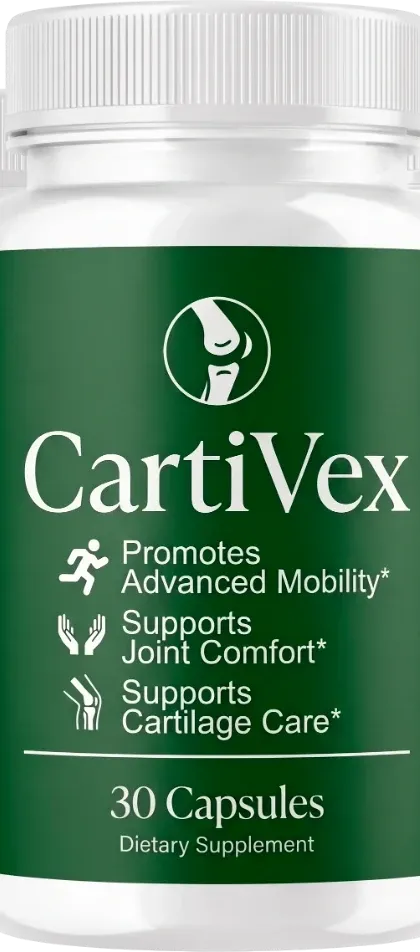
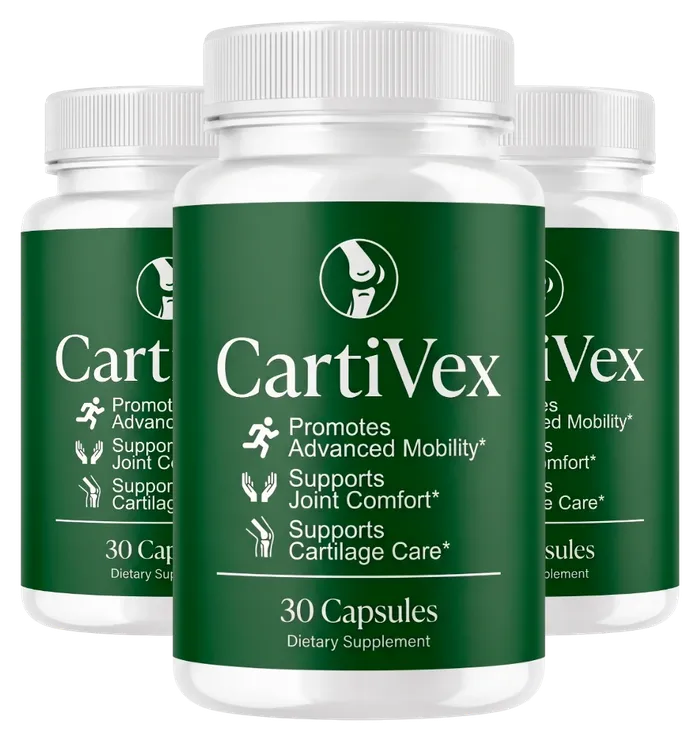
CartiVex is a one-a-day turmeric capsule sold for joint comfort and mobility. Its own effect has not been tested in a published study, so judge it with the seven checks and a fair trial of at least 30 days.
How do I choose a joint supplement like CartiVex?
Read the label for an amount on every active line, compare the dose with what trials used, check for medicine interactions and ask your doctor. The guide lists seven checks you can run before you pay.
What should I look for on a joint supplement label?
Look at which ingredients are listed and how much of each is in a serving. This guide goes through the dose, safety and label before you buy.
Our view
Joint supplements are not scams by default, and they are not miracles. At best they are a small extra with modest, uneven evidence. The label, the dose and your medicines decide whether one is a sensible choice for you.
Use the seven checks on every product, and be wary of cure claims, FDA approved wording, doctor quotes with no name and review pages with no author. Health claims need good human trials, and testimonials cannot supply them (FTC, 2022).
The habits with the best proof are plain: regular exercise and, when needed, weight loss (Kolasinski et al., 2020). Whatever you choose, see a doctor first for a hot, red or swollen joint, a locking joint, fever with joint pain or pain after an injury.