Joint Health Guide: Exercise, Weight and When to See a Doctor
Written by the CartiVex editorial team
Last updated · Who reviewed this page · How we write and review
Joint health rests on regular exercise and, if you carry extra weight, weight loss: the 2019 osteoarthritis guideline strongly recommends both. A hot, swollen or locking joint, fever or pain after injury needs a doctor first. No pill rebuilds cartilage, and turmeric supplements, including CartiVex, are a small extra at most.
What is osteoarthritis? The CartiVex guide's plain definition
Osteoarthritis is a disease of the whole joint, not just worn-out cartilage (NIAMS, n.d.). It changes the cartilage, the bone underneath and the tissues around the joint.
It most often affects knees, hips, hands and the spine. There is no cure, so care aims to ease pain and keep you moving (MedlinePlus, 2024).
- Pain that grows with use and eases with rest
- Stiffness after sitting or first thing in the morning
- A joint that feels less flexible than it used to
- Grinding or clicking with some movements
Other kinds of arthritis, such as rheumatoid arthritis or gout, look different and need their own treatment. A doctor can tell them apart with an exam and, if needed, tests.
Which joint pain needs a doctor before anything else?
Some joint pain should be checked by a doctor before you try any home plan or supplement. MedlinePlus lists fever, pain lasting more than several days, unexplained weight loss, and severe pain with swelling and no clear cause (MedlinePlus, 2026).
Pain after a fall or twist belongs on that list as well.
What does the evidence say about osteoarthritis care?
Exercise and, when needed, weight loss have the strongest support. The 2019 American College of Rheumatology guideline strongly recommends both and strongly recommends against glucosamine (Kolasinski et al., 2020).
The table sets the common options side by side, with the source for each line.
| Option | What the evidence says | Source |
|---|---|---|
| Exercise | Strongly recommended; improves pain and function a little to a moderate amount | (Kolasinski et al., 2020) (Lawford et al., 2024) |
| Weight loss, if overweight | Strongly recommended | (Kolasinski et al., 2020) |
| Glucosamine | Strongly recommended against | (Kolasinski et al., 2020) |
| Glucosamine and chondroitin | Mixed results; may interact with warfarin | (NCCIH, 2016) |
| Turmeric or curcumin | Not addressed by the guideline; small, short trials suggest some pain relief | (NCCIH, 2025) (Paultre et al., 2021) |
| Pain relievers | A standard first step, chosen with your doctor | (MedlinePlus, 2024) |
Exercise for knee and hip osteoarthritis
Exercise is the habit with the most proof behind it. A Cochrane review of 139 trials with 12,468 people found it likely eases knee pain and improves function (Lawford et al., 2024).
You do not need a gym. Mix the four kinds of movement below through your week.
Walking
Short, flat walks most days, adding a few minutes each week.
Strength
Sit-to-stand, leg raises and bands to build the thigh muscles.
Range of motion
Slow bends and stretches to keep the joint moving.
Low-impact cardio
Cycling, swimming or water walking with little joint pounding.
Mild aching that settles within a day is common when you start. Sharp pain or swelling that lingers is a sign to ease off and ask a physical therapist.
How body weight affects sore knees and hips
Extra body weight adds load to the knees and hips with every step and stair. That is why the 2019 guideline strongly recommends weight loss for people with osteoarthritis who carry extra weight.
Small, steady changes are easier to keep than a strict diet. Pair food changes with the exercise plan above, since both help the same joints.
A joint-friendly daily routine, step by step
These five steps turn the habits above into one ordinary day. Times and order are ideas to adapt, not medical rules.
- 1
Warm up stiff joints
A warm shower or gentle bends before you head out the door.
- 2
Move in short bouts
A 10-minute walk after a meal, or a few sit-to-stands during TV ads.
- 3
Build strength
Two or three short strength sessions a week for the thighs and hips.
- 4
Cool a busy joint
A wrapped cold pack for 15 to 20 minutes after a long day on your feet.
- 5
Rest well
A regular bedtime, since tired muscles guard joints less well.
Can cartilage be rebuilt? What studies show
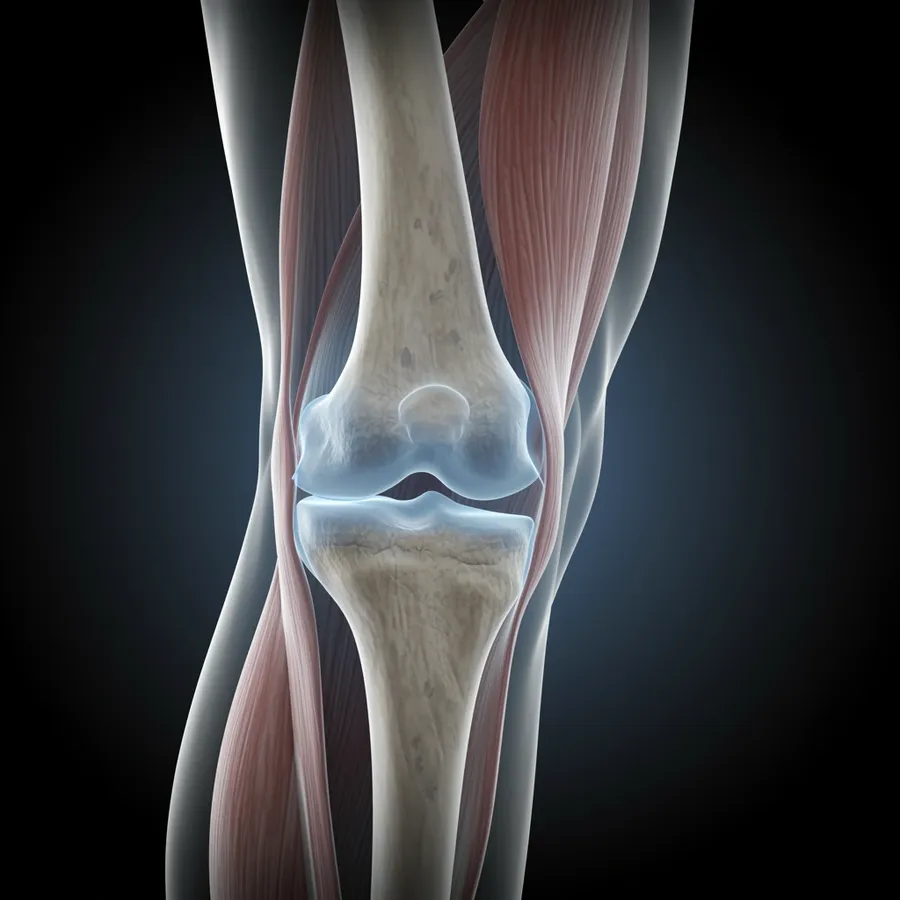
No pill or capsule has been shown to rebuild worn cartilage. In a 12-week trial, turmeric extract eased knee pain a little more than placebo but did not change cartilage or swelling on scans (Wang et al., 2020).
Label phrases such as Supports Cartilage Care are structure/function claims. The FDA does not review them before sale (FDA, 2024), and they are not proof of repair.
Where turmeric supplements like CartiVex fit, honestly
Turmeric is at most a small extra next to exercise and weight care. NCCIH says early studies hint it may ease knee pain, but better research is needed (NCCIH, 2025).
The dose matters. Reviews of knee trials used about 93 to 2,000 mg of curcuminoids a day (Paultre et al., 2021), and one meta-analysis pointed to about 1,000 mg (Daily et al., 2016).
CartiVex states about 28.5 mg of curcuminoids from its 95% extract, plus an unstated amount from its 4:1 extract. That is below the lowest dose in those reviews. The curcumin dose post explains the numbers, and the joint supplement checklist shows how to judge any label.
A 12-week joint habit timeline
Habits stick when you add them one at a time. Each stage below sets a habit goal, not a result to expect.
- Weeks 1-2
Start walking
Pick a daily time and walk a short, flat route you enjoy.
- Weeks 3-4
Add strength
Two short sessions a week of sit-to-stands and leg raises.
- Weeks 5-8
Build the base
Add a few minutes to each walk and try cycling or water exercise.
- Weeks 9-12
Review food and weight
Swap sweet drinks and large portions for simpler meals.
- After week 12
Check in
Tell your doctor what changed and ask what to add next.
Track pain and stiffness on a simple 0 to 10 scale each week. The note helps your doctor, and the side effects page lists what to watch for if you add a supplement.
Sources for the CartiVex joint health guide
Every research line above links to its source. The four core references are listed here in full.
- Kolasinski SL, et al. (2020). 2019 American College of Rheumatology/Arthritis Foundation Guideline for the Management of Osteoarthritis of the Hand, Hip, and Knee. Arthritis & Rheumatology 72(2):220-233. Dose: -. The guideline strongly recommends exercise and, when needed, weight loss, strongly recommends against glucosamine, and does not address turmeric. Source
- Lawford BJ, Hall M, Hinman RS, et al. (2024). Exercise for osteoarthritis of the knee. Cochrane Database of Systematic Reviews (CD004376). Dose: 139 trials, 12,468 people. Exercise likely improves knee osteoarthritis pain and physical function a little to a moderate amount right after a program ends. Source
- National Institute of Arthritis and Musculoskeletal and Skin Diseases (n.d.). Osteoarthritis. NIAMS (National Institutes of Health). Dose: -. Osteoarthritis is not simple wear and tear, and treatment aims to ease pain and keep joints working through exercise, weight management and other care. Source
- National Library of Medicine (2026). Joint pain. MedlinePlus Medical Encyclopedia. Dose: -. See a provider for joint pain with fever, joint pain lasting more than several days, unexplained weight loss, or severe pain and swelling with no clear cause. Source
Joint health: common questions
Questions people type into Google and Bing, answered from the label and the sources on this page.
What is the best thing to do for joint pain?
For osteoarthritis, regular exercise has the strongest backing, along with weight loss when it is needed (Kolasinski et al., 2020). New, hot or swollen joints need a doctor before any home plan.
What exercises are good for knee arthritis?
Walking, thigh-strengthening moves, gentle range-of-motion work and low-impact cardio such as cycling or swimming all suit most people. A physical therapist can tailor a plan to your knee.
Does losing weight help knee pain?
For people carrying extra weight, yes. The 2019 osteoarthritis guideline strongly recommends weight loss in that case, because each step puts load through the knee.
When should I see a doctor for joint pain?
Go soon if the joint is hot, red or very swollen, if you have a fever, or if pain follows an injury or lasts more than several days (MedlinePlus, 2026). A joint that locks or gives way needs a check too.
What is the difference between osteoarthritis and rheumatoid arthritis?
Osteoarthritis is a disease of the whole joint that often builds slowly in knees, hips and hands. Rheumatoid arthritis is an autoimmune disease that attacks the joint lining and needs early care from a doctor.
Can you reverse cartilage loss?
Not with any proven pill. Osteoarthritis has no cure (MedlinePlus, 2024), and a 12-week turmeric trial saw no cartilage change on scans (Wang et al., 2020).
Is walking good for arthritis?
For most people with knee or hip osteoarthritis, yes. Start with short, flat walks and add a few minutes each week as your joints allow.
Does heat or ice help arthritis?
Many people find warmth eases morning stiffness and a cold pack calms a joint after activity. Keep a cloth between the pack and your skin and limit each session to about 15 to 20 minutes.
What foods are good for joints?
No single food protects cartilage. An eating pattern that helps you reach and keep a healthy weight does the most for weight-bearing joints.
Is osteoarthritis just wear and tear?
No. Experts now describe it as a disease of the whole joint, including cartilage, bone and the joint lining, not simple wear and tear (NIAMS, n.d.).