Choosing a Joint Supplement: A Buyer's Checklist That Checks Doses
Written by the CartiVex editorial team
Last updated · Who reviewed this page · How we write and review
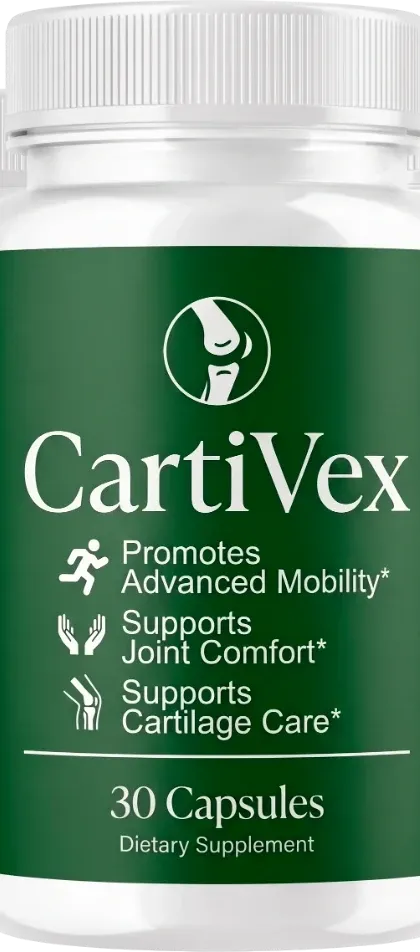
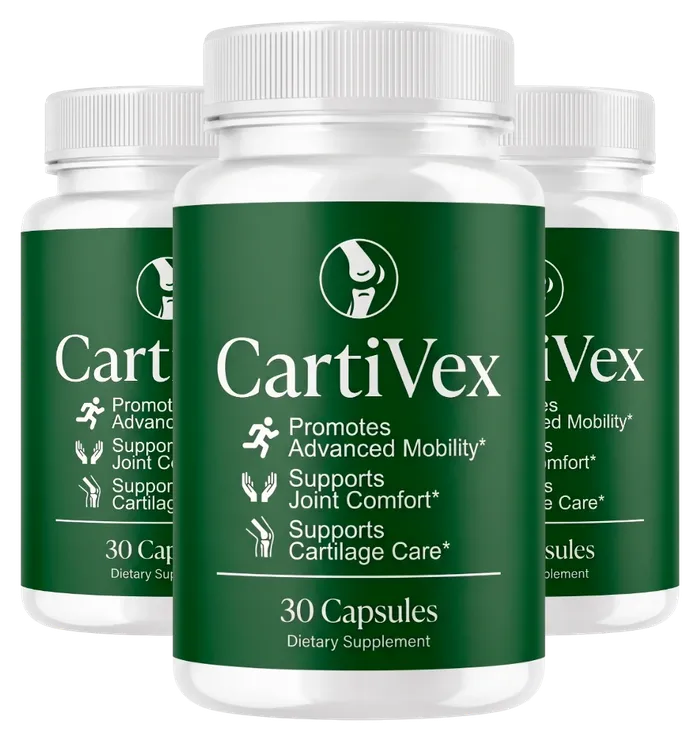
Judge a joint supplement by its label: printed amounts, a compound share for each extract, doses near those in trials, claims that match the ingredients and an independent quality seal. Knee trials used about 93 to 2,000 mg of curcuminoids a day. CartiVex passes on openness and seller contact but gives about 28.5 mg and no cartilage ingredients.
Why choose a joint supplement by its label first?
The label is the only part of a joint supplement you can check before you buy. Ads describe hopes, while the Supplement Facts panel shows what each capsule holds.
The FDA does not approve supplements before they are sold (FDA, 2022). The company, not the FDA, is first responsible for safety and for truthful claims (FDA, 2026).
That leaves the checking to you. This guide gives a simple method, then runs it on CartiVex with nothing held back.
The CartiVex buyer's checklist for any joint supplement
Run these ten checks on any joint supplement before you pay. Tick each box only when the label or the seller confirms it in writing.
Before you choose, check: 0 of 10 checked
A product does not need a perfect score. Each empty box is a question to put to the seller before you order.
How to compare a curcumin dose with research
Set the label amount beside the daily dose used in human trials. If the label is far lower, the trial results do not carry over to that bottle.
Here is the method, with the CartiVex turmeric line as the worked example.
- 1
Find the amount per serving
Read the Supplement Facts panel and note the serving size and each amount in mg.
- 2
Work out the active compound
Multiply by any purity figure. 30 mg of extract at 95% curcuminoids gives about 28.5 mg.
- 3
Look up the research dose
Find the daily dose used in human reviews, such as about 93 to 2,000 mg of curcuminoids for knee pain.
- 4
Compare the two
Divide the label amount by the low end of the research range to see the share you would get.
- 5
Check how it was taken
Note whether trials split the dose through the day, as several knee studies did.
For CartiVex, 28.5 mg against 93 mg is under a third of the lowest reviewed dose. Single knee trials used 1,500 mg a day in three doses (Kuptniratsaikul et al., 2014) (Panahi et al., 2014), about 50 times more.
Turmeric, glucosamine or collagen: what the evidence says
Turmeric has small, short trials that look modestly positive, while glucosamine is advised against by the main US guideline. None of the sources on this site reports a collagen trial for joints.
The table sums up what the sources on this site report.
| Ingredient | What research reports | 2019 guideline view |
|---|---|---|
| Turmeric or curcumin | Pain relief vs placebo in short trials; evidence rated very low quality in one large review (Liu et al., 2018) | Not addressed |
| Glucosamine | Mixed study results (NCCIH, 2016) | Strongly recommended against |
| Chondroitin | Mixed study results; may interact with warfarin | Not covered in our source summary |
| Black pepper (piperine) | Raises curcumin absorption in one high-dose study (Shoba et al., 1998) | Not addressed |
| Coleus forskohlii | No joint trials; weight trials only (NIH ODS, n.d.) | Not addressed |
Exercise beats every line in that table for evidence. The joint health guide covers it step by step.
Absorption claims: black pepper and the 2000% figure
Many turmeric labels add black pepper extract because curcumin is poorly absorbed and quickly cleared (Anand et al., 2007). The famous 2000% boost came from 20 mg of piperine taken with 2 grams of curcumin (Shoba et al., 1998).
UK experts called the piperine absorption claim questionable, with high uncertainty (UK COT, 2024). A product with 5 mg of piperine and a small curcumin dose cannot borrow that number.
Piperine can also raise blood levels of some medicines. The black pepper post lists them.
Quality seals, lab reports and what they prove
A USP, NSF or ConsumerLab.com seal is the strongest quality sign on a bottle. It shows the product was made properly and holds what the label says, but not that it works (NIH ODS, 2023).
An FDA registered facility claim is not a quality seal. The FDA does not issue registration certificates (FDA, 2024).
 Describes the factory, not FDA approval
 Ingredients sourced in the US and abroad
 Points to the 60-day refund terms
The CartiVex seals cover the factory, ingredient sourcing and the refund. None is an independent lab seal, and lot CV-26/GO-8059 and CoA CV-8059-26-GO are draft labels, not lab proof. The testing and quality page has the detail.
Red flags on joint supplement websites
Some sales pages lean on claims the law does not allow or proof that does not exist. Health claims generally need good human trials, and testimonials alone cannot prove a product works (FTC, 2022).
Since 2024, the FTC can also seek penalties for fake or bought reviews (FTC, 2024). Watch for these signs:
- Promises to cure arthritis, rebuild cartilage or replace pain medicine
- The words FDA approved on a dietary supplement
- A doctor endorsement with no checkable name or license
- Testimonials labeled illustrative, or star ratings with no source
- Review pages with no author that all praise the same product
- Countdown timers that push you to buy before you read the label
CartiVex scored against the buyer's checklist
Here is the checklist run on CartiVex using only the label and the seller's terms. It passes on openness and seller contact, and fails on dose.
A fail does not mean the capsules are unsafe. It means the research cannot predict a result from this bottle.
| Check | What CartiVex shows | Result |
|---|---|---|
| Amounts printed | All four active lines show an amount in mg | Pass |
| Compound share | 95% extract states curcuminoids; 4:1 extract and coleus do not | Partial |
| Curcumin dose | About 28.5 mg stated vs about 93-2,000 mg in reviews | Fail |
| Piperine dose | 5 mg vs 20 mg in the absorption study | Below study level |
| Claims vs ingredients | Cartilage care claim, but no glucosamine, chondroitin or collagen | Mismatch |
| Claim wording | Supports and promotes wording, with the FDA disclaimer | Pass |
| Finished-product study | None published | Fail |
| Quality seal or lab report | None; lot and CoA are draft labels | Not published |
| Seller contact | Order support +1 (507) 448-8190, office and returns address | Pass |
| Refund terms | 60 days; 30 days of use asked; start date not published; buyer pays return shipping | Partial |
The full dose comparison for every line is on the ingredients page.
What the CartiVex score means for you
CartiVex is an open label from a seller you can phone, but its curcumin dose is small. If you want amounts that match the trials, this formula does not reach them.
If you want a modest, one-a-day turmeric capsule with a refund window, it meets that bar. Weigh both sides.
Pros
- Every active amount printed
- One capsule a day, 30-day bottle
- A phone desk, office and returns address
- Claims stay in support wording
Cons
- Curcuminoids far below trial doses
- No cartilage ingredients despite the claim
- No study of the finished formula
- Gelatin capsule, not vegetarian
Questions to ask before you order CartiVex or any rival
A few direct questions settle most doubts. Ask them of any seller, including the CartiVex order desk at +1 (507) 448-8190.
- How many curcuminoids does the 4:1 extract hold?
- What share of forskolin is in the coleus extract?
- Does the 60-day window start at purchase or at delivery?
- Is there an independent lab report for my lot?
Choosing a joint supplement: common questions
Questions people type into Google and Bing, answered from the label and the sources on this page.
What is the best joint supplement?
No joint supplement suits everyone, and none replaces exercise or a doctor's care. The better question is which label gives a research-level dose, clear amounts and honest claims.
What should I look for in a joint supplement?
Look for printed amounts, a key-compound percentage for each extract, doses near those used in trials and an independent quality seal. Then check it against your medicines.
Which is better: turmeric or glucosamine?
Neither is a sure bet. The 2019 osteoarthritis guideline strongly recommends against glucosamine and does not rate turmeric at all (Kolasinski et al., 2020), while small turmeric trials look modestly positive.
Do glucosamine and chondroitin work?
Studies give mixed results, and both may interact with the blood thinner warfarin (NCCIH, 2016). Many people try them, but the evidence stays unsettled.
How much curcumin should be in a supplement?
Knee osteoarthritis trials used about 93 to 2,000 mg of curcuminoids a day (Paultre et al., 2021). A meta-analysis pointed to about 1,000 mg a day (Daily et al., 2016).
Is a higher curcumin dose better?
Not automatically. Liver injury from turmeric is rare, but most cases involve high-absorption products (NIDDK LiverTox, 2025), so more is not always safer or better.
What third-party seals should a supplement have?
USP, NSF and ConsumerLab.com seals show a product was made properly and holds what the label says (NIH ODS, 2023). They do not prove it is safe or that it works.
Are proprietary blends bad?
Not always harmful, but they hide how much of each ingredient you get. A key herb in a blend could be present in a tiny amount, and you cannot compare it with a study.
What are red flags on supplement websites?
Cure or rebuild claims, FDA approved wording, doctor quotes with no name, testimonials marked illustrative and countdown timers. Each one is a reason to slow down.
Should I ask my pharmacist about supplements?
Yes. Tell every health provider about the supplements you take (NCCIH, 2019). A pharmacist can spot clashes with your prescriptions in minutes.